Largest Contentful Paint (LCP)
LoadingThe moment the largest item in view, usually a photo or a headline, is fully drawn. Specifically, Google’s target is 2.5 seconds or under. Listing and gallery pages miss it more often than any others.

Speed Optimization
Speed optimization for Albany businesses whose visitors arrive on phones between places: on the bus, on a lunch break near the Capitol, or scrolling listings and menus on the way home.
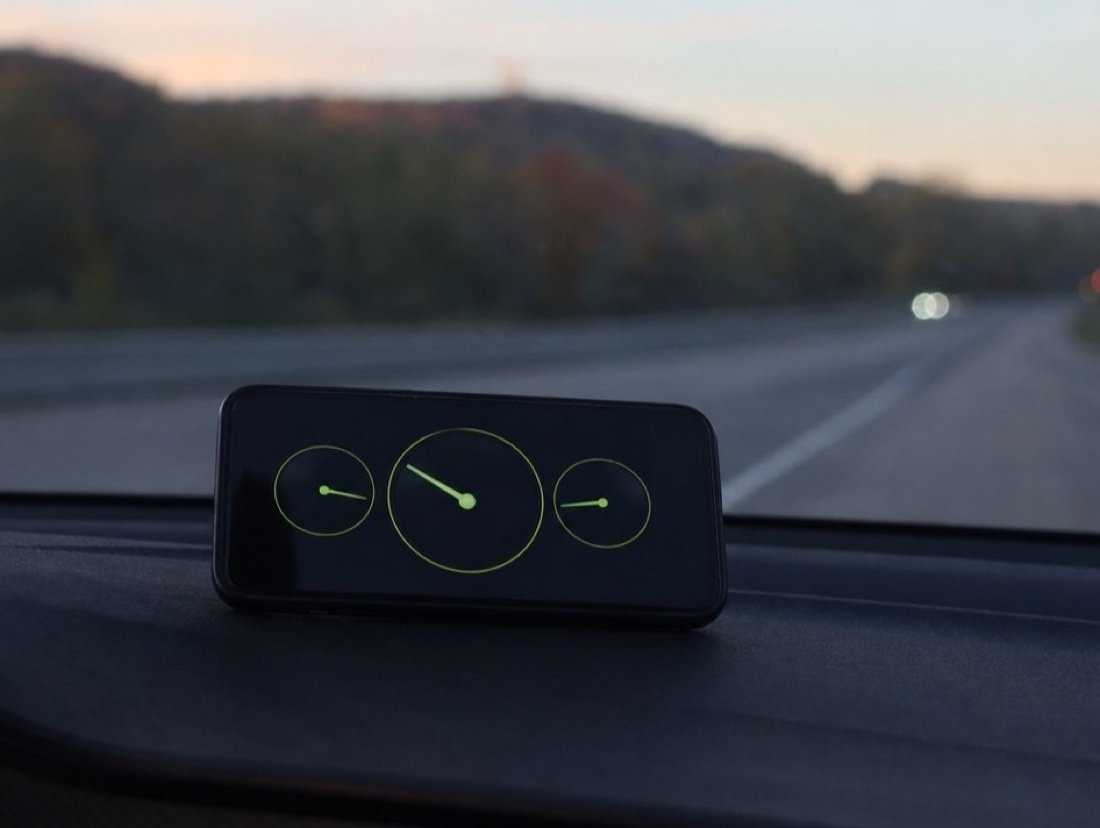
Each weekday Albany fills with state workers, hospital staff and students who live elsewhere, and many of them search from a phone: on a CDTA bus, in a parked car before a shift, or between lectures at UAlbany, which counted 17,426 students in fall 2025. The average commute runs to about 19.9 minutes, but phone signal in those minutes is not always strong. A page that hangs for several seconds loses them before it has said anything.
The searches themselves also call for speed. People who type “restaurants albany ny open now”, “hotels albany ny for tonight” or “albany ny things to do tonight” usually decide within a minute or two. Others, meanwhile, land on the heaviest pages a local business owns: apartment listings with dozens of photos, wedding venue galleries, restaurant menus posted as large PDFs.
Google also pays attention. Part of how it judges page experience comes from loading figures gathered on real Chrome visits, so a sluggish site is held back on two fronts: impatient visitors leave, and the data Google reads records it. Still, the remedy is rarely cutting photos or features. Instead, good speed optimization usually means sizing, file formats and the order in which things load.
Search demand
Drawn from Google’s autocomplete with US settings, October 2026. None mentions speed, but each sends someone on a phone to the kind of page that tends to load slowly.
The photos that sell your rooms, dishes or listings can still stay. Resized for the screen, saved as WebP or AVIF, and loaded in sequence, with the first image prioritized and the rest waiting until the visitor scrolls, they look the same and arrive much sooner. Menus become quick web pages instead of bulky PDFs. We begin with your busiest pages and aim for a pass in Google’s real-visitor data rather than a flawless lab score.
Common causes
Slow sites seldom have one cause, so expect to find several of these together.
A single image straight off a camera or from a listing shoot can outweigh the rest of the page combined, only to be shown at phone width. Scaling and re-encoding it, however, strips away most of the bulk.
Before showing a single line, the phone has to fetch the entire file, and the type is tiny and awkward to search. Rebuilt as an ordinary web page, the same menu then opens sooner and shows up in Google.
Rental and property pages often pull in every image at once. Instead, loading the first few and fetching the rest on demand changes the experience entirely.
Page builders, chat tools and review widgets often load their full code everywhere, whether a given page uses them or not.
If the server takes too long to begin sending the page, every later step is delayed. Caching helps, but sometimes a better host is the only real answer.
Google’s three measures
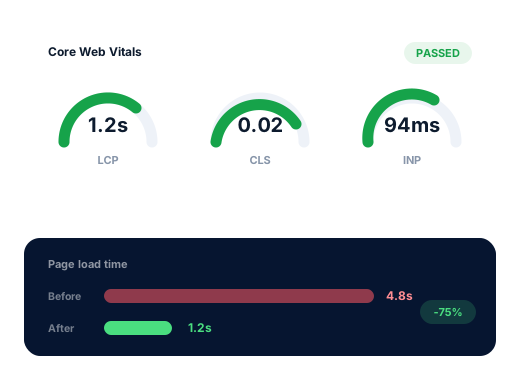
Google publishes three page-experience measures, known as Core Web Vitals, and Chrome gathers them from real visits over a rolling 28 days. A page passes one when 75% of visits meet its target, which matters most on pages opened in a hurry on a bus or between meetings.
The moment the largest item in view, usually a photo or a headline, is fully drawn. Specifically, Google’s target is 2.5 seconds or under. Listing and gallery pages miss it more often than any others.
The delay between a tap, say on a menu button or a rental filter, and the page visibly reacting. Here the target is 200 milliseconds or under, while chat widgets, booking plugins and piles of tracking tags push it up.
How much the layout jumps while it loads, which is how a visitor aiming for “Directions” ends up on “Call”. Below 0.1 is a pass, reached by reserving room for images, notices and embeds before they appear.
The work
Before any change, we log phone scores, field data from real visitors and the weight of each of your busiest pages.
Each photo cut down to the size it is shown at, compressed, delivered in WebP or AVIF if the browser takes it, and fetched only as the visitor scrolls near it.
PDF menus, rate sheets and price lists rebuilt as light HTML, so they load quickly and can be searched.
Chat bubbles, review badges and tracking tags wait until the page is ready to use, and plugins with no job left are deleted.
Caching on the server and in the browser, configured for your particular host, plus a CDN if the gain justifies it.
Fresh numbers the day the work goes live, and then again a month on, after Google’s real-visitor report has had time to refresh.
Done carefully
Ground rules we keep for every Albany client, written down so you can hold us to them.
Speed keeps people from leaving before they have seen you. Whether they choose you still depends on your reviews, your prices and what your pages say.
Page experience is one input among a great many for Google, and we present it honestly. When your pages pass, we tell you the job is done and suggest where effort would pay better, perhaps fuller service pages or a stronger Business Profile. Speed optimization is quoted as a single project, but only after an audit is complete.
Ask us about your business
How we work
Four stages that every Albany client goes through, whatever the trade.
Your site, map listing and reviews, with rankings sampled from downtown, the neighborhoods and the suburbs you serve.
We choose the “albany ny” searches worth winning and match each one to a single page with one job.
Changes to your listing, pages, copy and directories, ordered by how soon each should pay off in calls.
A short note on calls, leads and positions, and what we will tackle next.
Questions
There are two simple tests. To begin with, run your home page through Google’s free PageSpeed Insights and read the mobile results drawn from real visitors. Then take your phone off Wi-Fi and open your busiest page the way a stranger would.
On phones, usually yes, because the whole file has to download before anything appears. A web page version loads faster, reads better and can be found in search, while the PDF can stay as a download for anyone who wants to print it.
Rarely. Most galleries can keep every image once each one is resized, compressed and loaded only when needed. We might suggest dropping near-duplicates, but that choice stays with you.
Sometimes, at the margin, when competing pages are otherwise close. However, the more dependable gain is that people who see your page quickly are more likely to stay, read and get in touch.
On a small site the changes themselves are a one- or two-week job. Google’s field report then has to collect around four weeks of fresh visits, so its verdict arrives about a month behind the work.
One fixed fee, set once the audit pinpoints what is dragging your pages down. After that, the routine care inside all three monthly plans, $300, $500 or $700 in US dollars keeps the speed where it should be.
Further reading
Related articles for Albany owners who want more detail on this subject.
Each service can be hired on its own, and plenty of Albany clients start with a single one.
Customers in each field phrase their searches differently, so each of these pages has its own research behind it.
A free check of your rankings from downtown to Colonie, the competitors placed above you and the fixes that would matter most.
Send me my free audit